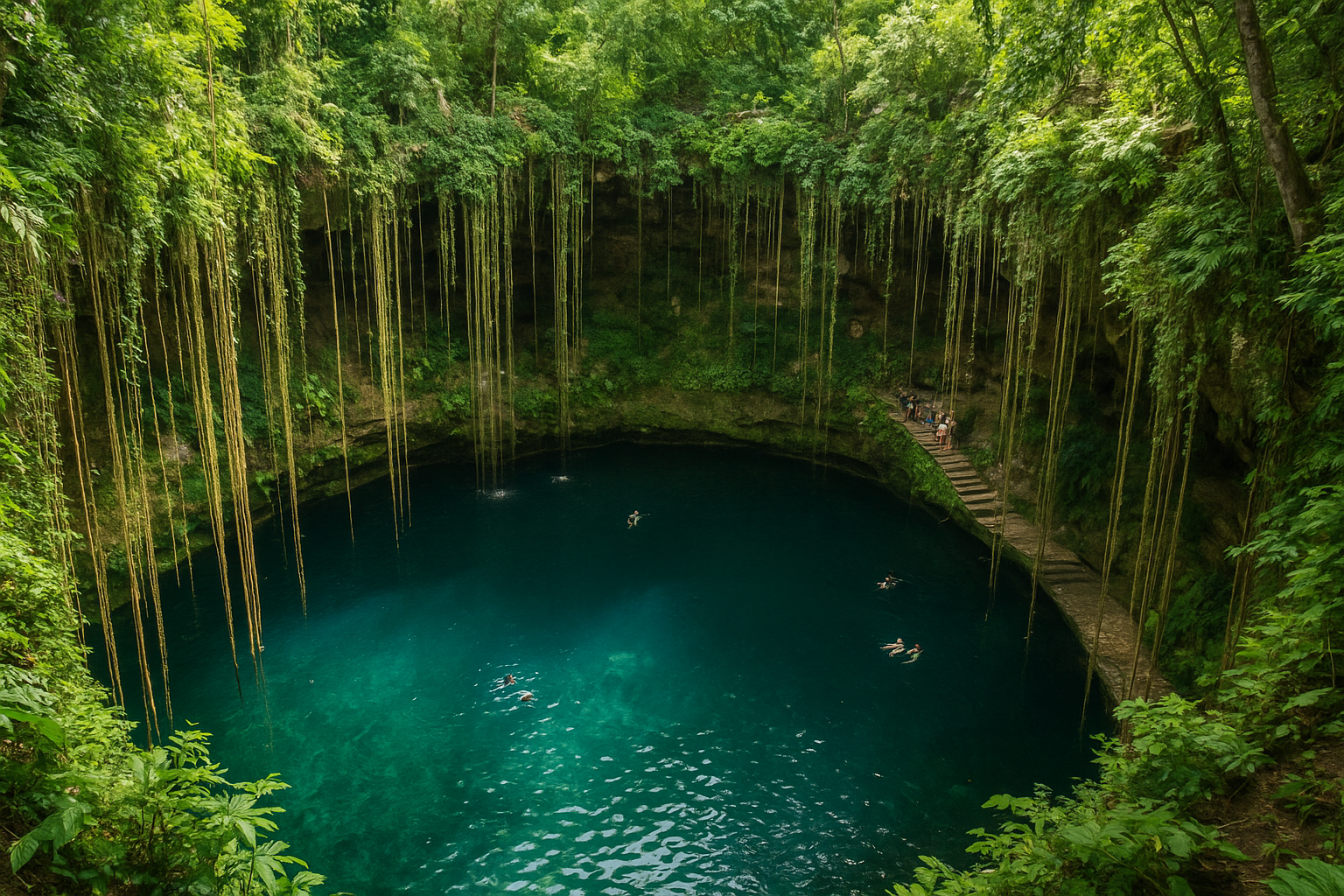

If you’ve ever dreamt of swimming in a crystal-clear pool beneath hanging vines and shafts of sunlight, you’re thinking of a cenote. These natural sinkholes, found primarily in Mexico’s Yucatán Peninsula, are windows into a world both mystical and mesmerising. The 5 most famous cenotes offer more than just a dip in cool water — they’re a journey into history, geology, and ancient Mayan spirituality.
Cenotes were once believed to be sacred gateways to the underworld. Today, they’ve become some of the most sought-after destinations for travellers seeking tranquillity, adventure, and a touch of magic.
Understanding Cenotes: Nature’s Hidden Pools
Cenotes are natural limestone sinkholes filled with groundwater, formed over thousands of years as rainwater eroded the limestone bedrock. When the roof of an underground cave collapses, it exposes the water below — creating a breathtaking, often otherworldly pool.
Types of Cenotes
Cenotes come in various shapes and forms:
-
Open cenotes resemble small lakes surrounded by cliffs and greenery.
-
Semi-open cenotes have partial cave coverings, letting sunlight stream dramatically through.
-
Underground cenotes remain hidden beneath the earth, accessible only through small openings or tunnels.
How Cenotes Form
The Yucatán Peninsula’s porous limestone allows rainwater to seep through and dissolve the rock over time. When the roof collapses, the result is a cenote — a blend of geological wonder and natural artistry.
Exploring the 5 Most Famous Cenotes
Let’s dive into the world’s most renowned cenotes — each with its unique charm and story.
1. Cenote Ik Kil, Mexico
Known as the “Sacred Blue Cenote,” Ik Kil lies near the ancient ruins of Chichén Itzá. Perfectly circular and framed by hanging vines, it’s one of the most photogenic cenotes in Mexico.
What Makes Cenote Ik Kil Special
Visitors can descend via stone steps into a pool surrounded by lush vegetation. The water is deep and cool — perfect for swimming after a day exploring Mayan temples. Its symmetry and natural beauty make it one of the most photographed cenotes in the world.
2. Gran Cenote, Tulum
Just outside Tulum, the Gran Cenote offers a magical blend of open-air swimming and cave exploration. It’s ideal for snorkellers, as its clear waters reveal intricate rock formations and marine life.
Activities and Wildlife
Home to turtles, small fish, and even bats, Gran Cenote feels alive with movement. The interplay of light and shadow beneath the cave ceiling creates a surreal experience for underwater explorers.
3. Cenote Dos Ojos, Quintana Roo
Translating to “Two Eyes,” Cenote Dos Ojos features two circular pools connected by underwater tunnels. It’s one of the world’s top diving spots, attracting adventurers from around the globe.
Diving Adventures
Divers can navigate through the connecting passages, where visibility stretches over 100 metres. The stalactites and stalagmites form natural sculptures that seem frozen in time — an experience that feels like floating through a dream.
4. Cenote Suytun, Valladolid
If you’ve seen a photo of a beam of light illuminating a stone platform, it was likely taken at Cenote Suytun. Located near Valladolid, it’s an underground cenote famous for its cinematic atmosphere.
Photography and Cultural Significance
Visitors often wait for the perfect moment when sunlight filters through the hole above, casting a celestial glow. It’s not just a cenote; it’s an artistic masterpiece shaped by nature.
5. Cenote Azul, Playa del Carmen
Unlike many cenotes hidden in caves, Cenote Azul is open and bathed in sunlight. Surrounded by lush jungle, it’s a favourite among families and casual swimmers.
What to Expect
Multiple platforms make it ideal for cliff jumping, while shallower sections cater to beginners. Its clear turquoise water provides a stunning contrast to the surrounding greenery, making it a tranquil escape.
Related: Cenote Saamal
Practical Travel Tips for Visiting Cenotes
Visiting cenotes requires respect for nature and awareness of local customs.
Safety and Sustainability
-
Avoid using chemical sunscreens — they harm aquatic life. Opt for reef-safe alternatives.
-
Follow local guidelines; many cenotes are part of protected ecosystems.
-
Always shower before entering to maintain water purity.
What to Bring
-
Biodegradable sunscreen
-
Towel and waterproof bag
-
Cash (for entry fees)
-
Snorkel or diving gear
Tip: Visit early in the morning to enjoy the serenity before crowds arrive.
Conclusion: Dive into Nature’s Magic
The cenotes aren’t just swimming holes — they’re ancient natural wonders connecting us to the Earth’s history. Whether you’re diving through the twin eyes of Dos Ojos or basking in the ethereal light of Suytun, cenotes remind us of the harmony between water, stone, and spirit.