If you’ve ever followed an American recipe, you’ve probably come across measurements like cups and quarts. For those of us used to grams and millilitres, these imperial units can be confusing. However, understanding them can make international recipes far more accessible and accurate.
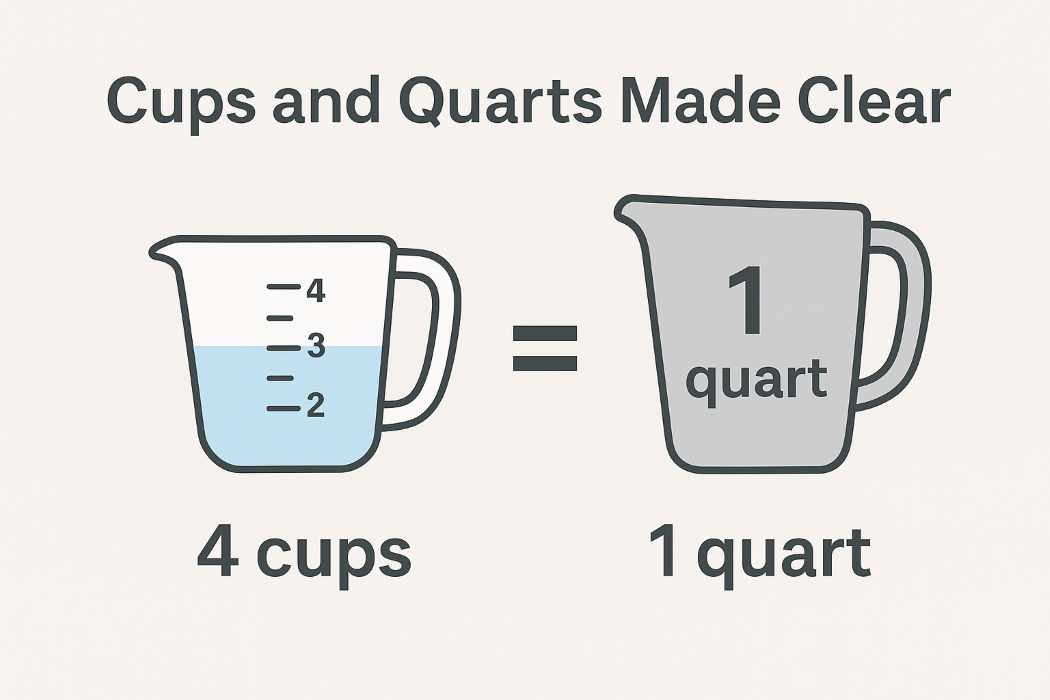
In simple terms, a cup and a quart are both units of volume, primarily used in the United States. A cup measures smaller quantities, while a quart is used for larger volumes—particularly liquids.
- 1 quart equals 4 cups.
- 1 cup equals ¼ of a quart.
That’s the basic relationship, but there’s more to know if you want precision in your cooking.
How Much Is a Cup in British Terms?
A US cup equals 240 millilitres (ml), while a UK (imperial) cup—which is rarely used today—equals 284 ml. Most British recipes now list ingredients in millilitres, grams, or ounces.
So, when converting a recipe, make sure to note whether it’s using US cups or imperial cups, as the difference can affect your final dish.
For instance:
- 1 US cup of water = 240 ml
- 1 UK cup of water = 284 ml
A small variation, but in baking, it can make a big difference.
Breaking Down Quarts in Simple Terms
A quart (short for “quarter”) literally means a quarter of a gallon. In the US system:
- 1 US quart = 4 US cups = 2 US pints = 32 US fluid ounces (fl oz).
In the UK, however, an imperial quart equals 40 imperial fluid ounces, or roughly 1.136 litres—larger than the American quart (which is about 0.946 litres).
Therefore, if you’re converting an American recipe, it’s best to stick with US measurements to keep proportions right.
Quick Conversion Chart: Cups to Quarts
| Cups | Quarts | Millilitres (approx.) |
|---|---|---|
| 1 cup | 0.25 quart | 240 ml |
| 2 cups | 0.5 quart | 480 ml |
| 3 cups | 0.75 quart | 720 ml |
| 4 cups | 1 quart | 960 ml |
Keep this simple table handy next time you’re cooking—it makes conversions quick and accurate.
Related: How Many Cups In A Quart?
Practical Tips for Measuring Cups and Quarts
- Use the right tools.
Measuring cups and jugs designed for liquid or dry ingredients can vary. Use a liquid measuring jug for fluids and standard measuring cups for dry ingredients. - Level it off.
For dry ingredients like flour, always level the top with a flat edge. This ensures consistency in baking. - Convert before you start.
If the recipe lists cups but you only have metric tools, convert all your quantities before mixing. This prevents mid-recipe confusion. - When in doubt, use millilitres.
Since millilitres are universal, converting to metric early keeps things simple.
Why It Matters
Cooking and baking rely on precision. Confusing cups and quarts—or mixing up US and UK measurements—can drastically affect texture, flavour, and cooking time. A small miscalculation might mean a soggy sponge or overly thick soup. By learning these conversions, you’re not just following recipes—you’re mastering them.
Final Thoughts
Understanding cups and quarts may seem minor, but it’s an essential skill for any global home cook. Whether you’re adapting an American recipe for your British kitchen or doubling a family favourite, getting your measurements right ensures delicious, consistent results every time.
For more detailed conversion charts, visit BBC Good Food’s measurement guide.