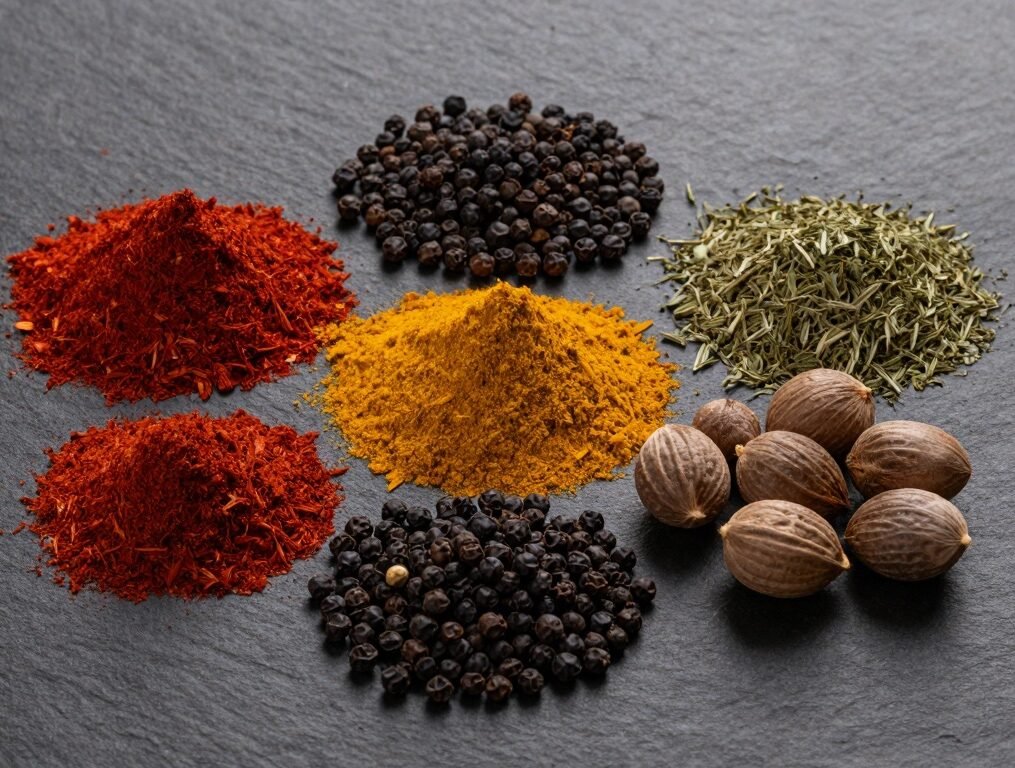
Ever wondered why some home-cooked meals taste like they came from a fancy restaurant? It’s often the magic of great seasonings that makes the difference. While salt and pepper form the base, these top five types of seasoning take your cooking to new heights. They add layers of flavour and depth that turn simple dishes into something special. Let’s explore how to use them and elevate your cooking game right away.
1. The Allium Powerhouse: Enhancing Savoury Depth
Dried alliums like onion and garlic powder act as key building blocks for any savoury dish. They bring out that rich, earthy taste without the hassle of chopping fresh ones every time. You can sprinkle them into almost everything, from quick weeknight stir-fries to hearty roasts.
These powders stay handy in your cupboard and pack a punch of flavour. Fresh versions are great, but dried ones save time and blend evenly. Plus, they don’t make your eyes water.
Garlic Powder: The Umami Amplifier
Garlic powder shines in rubs for meats, thick sauces, and tangy marinades. It boosts that savoury umami note that makes food addictive. Use about half the amount you’d use with fresh garlic cloves—start with a teaspoon per clove to dodge any bitter edge.
Try it on roasted chicken or in a simple pasta sauce. The fine texture melts right in, so no chunks to surprise you. It’s a must-have for busy cooks who want big taste fast.
Onion Powder: The Sweet Base Note
Onion powder adds a subtle sweetness that grounds soups, stews, and slow-cooked meats. It balances out bolder spices in your blends, like in a curry or taco mix. Just a pinch can lift a bland pot of chilli to something memorable.
This powder dissolves easily, so it works well in wet dishes. For dry rubs, it clings nicely to proteins before grilling. Keep it on hand for those last-minute meal rescues.
Practical Application Tip: Bloom Your Powders
Heat your allium powders gently in a bit of oil before pouring in liquids. This quick step wakes up the fat-soluble compounds and makes the flavours pop brighter. You’ll notice the aroma fills your kitchen in seconds.
Do this for soups or sauces to get restaurant-level depth. It only takes a minute, but the payoff is huge. Experiment with a dash next time you cook.
2. Warming Spices: Introducing Aromatic Complexity
Warming spices such as cinnamon, nutmeg, and cloves bring a cosy aroma to your food. They add warmth without too much fire, perfect for both sweet treats and savoury mains. Think of them as the secret to dishes like spiced tagines or warming chilli.
These spices layer in complexity that makes meals feel thoughtful. You can use them year-round, but they shine in winter comfort food. A little goes a long way to shift ordinary recipes.
They bridge sweet and savoury worlds in clever ways. Once you start, you’ll reach for them more often.
Cinnamon: Savoury Crossovers
Ceylon cinnamon offers a milder, sweeter profile than the bolder Cassia type. In savoury spots, it deepens meat rubs for barbecue or slow-braised lamb. Don’t save it just for apple pie—try a sprinkle in your next lentil stew.
This spice tempers richness and adds intrigue. Use ground or sticks simmered in sauces for even infusion. It’s easy to love once you branch out.
Nutmeg and Mace: The Creamy Enhancer
Nutmeg and its outer layer, mace, make creamy sauces like Béchamel sing. They pair beautifully with potatoes in gratins or mashed sides. Grate fresh from whole nuts for the strongest hit—pre-ground loses punch fast.
A quick grate over veggies before roasting adds nutty warmth. These work wonders in dairy-based dishes too. Keep a whole nutmeg in your spice drawer.
Sourcing and Storage for Potency
Buy whole spices when you can, then grind small batches at home for freshness. Ground versions fade quicker, often in six months, while wholes last up to two years. Store in cool, dark spots away from heat or light.
This habit keeps your warming spices vibrant. Check dates on bottles to avoid dull flavours. Fresh ones make your cooking stand out.
3. Herbaceous Brightness: Freshness and Finish
Herbs bring a fresh, green lift to your plates that no powder can match. Woody types like rosemary and thyme stand up to long cooks, while soft ones like parsley add a final pop. They brighten dishes and make them feel alive.
Mix dried and fresh for the best results. This combo gives you control over timing and taste. Herbs turn good meals into great ones with ease.
Start small if you’re new to them. Soon, they’ll be your go-to for vibrancy.
Dried Hardy Herbs: Thyme and Oregano
Thyme and oregano thrive in Mediterranean recipes or slow-simmered pots like tomato sauce. Use dried versions early in the cooking so flavours meld. Remember the rule: one part dried equals three parts fresh to keep the balance.
These herbs add earthiness without overpowering. Toss them into bean soups or grilled fish. They’re tough enough for ovens, too.
The Finishing Power of Fresh Parsley and Chives
Fresh parsley and chives are sprinkled on at the end for colour and zing. Chefs often use parsley to make plates look pro and taste brighter. Snip chives over baked potatoes or eggs for that crisp bite.
They cut through richness, like in creamy pastas. No cook is complete without this last touch. It takes seconds but wows guests.
Infusion Technique: Herb Oils
Whip up herb oils by steeping fresh leaves in warm olive oil. Drizzle over pasta or grilled veggies for an instant upgrade. Let it sit overnight for a deeper taste.
This method preserves that bright essence. Use it on salads too. Simple and game-changing.
4. The Pungent Trio: Peppercorns, Chilli, and Heat Control
Pungent elements like pepper and chilli add bite and balance to your cooking. They control heat so it enhances, not overwhelms. Fresh grinding makes a world of difference over dusty jars.
These build excitement in every bite. Layer them thoughtfully for harmony. You’ll crave that edge in meals.
Master this trio, and your food gains fire.
Freshly Cracked Black Peppercorns: The Non-Negotiable
Crack black pepper fresh from the mill—it’s worlds better than pre-ground stuff. Tellicherry peppercorns offer bold notes, while white ones suit lighter dishes. Grind over steaks or salads for sharp aroma.
The oils release right then, packing more punch. Invest in a good grinder. It pays off daily.
Smoked Paprika: Depth Without Overpowering
Smoked paprika, or Pimentón from Spain, mimics grill smoke in veggie rubs or stews. It adds smoky layers to eggs or chickpeas without real fire. Sweet or hot varieties let you choose intensity.
Sprinkle on potatoes or fish for warmth. This spice fools your taste buds into thinking you barbecued. Versatile and easy.
Red Pepper Flakes (Chilli Flakes): Measured Intensity
Toast red pepper flakes dry in a pan for a moment to bloom their heat. Stir oils for sauces without burning the kick. Start with a quarter teaspoon per serving to test spice levels.
They jazz up pizzas or noodles fast. Control comes from toasting right. Heat your routine.
Related: Furikake Seasoning
5. The Umami Builders: Fermented and Concentrated Flavours
Umami builders like fermented sauces fill in that savoury gap many home cooks miss. They enhance without stealing the show. A dash here and there deepens everything from veggies to meats.
These act as quiet heroes in your pantry. Once added, you’ll wonder how you cooked without them. They make flavours stick.
Explore them for that extra edge.
Nutritional Yeast: The Savoury Cheese Substitute
Nutritional yeast sprinkles a cheesy, nutty vibe on popcorn or roasted broccoli. Vegans love it, but anyone can use it for low-dairy wins. Two tablespoons per dish mimic Parmesan well.
It boosts salads or soups too. Flakes dissolve easily. Try it tonight.
Fish Sauce or Worcestershire Sauce: Secret Weapon Ingredients
A few drops of fish or Worcestershire sauce amp up tomato bases or burgers. They add fermented tang that rounds out tastes—no fishy hint if used light. Stir into gravies for hidden depth.
These work in veggie stir-fries as well. Small bottles last ages. Your secret edge.
MSG (Monosodium Glutamate): Understanding Natural Glutamates
MSG delivers pure umami, much like in mushrooms or cheese. Use a pinch in broths or stir-fries for max savouriness. It’s safe in moderation and amps natural glutamates.
Sprinkle on rice or meats sparingly. Myths aside, it enhances plainly. Give it a fair shot.
Conclusion: Seasoning Mastery as a Culinary Journey
We’ve covered the top seasonings: alliums for base depth, warming spices for aroma, herbs for brightness, pungents for kick, and umami for savouriness. Mastering these five simplifies building great flavours at home. Layer them step by step, and watch your meals soar.
Next time you cook, tweak ratios in a favourite recipe. Start with one new tip, like blooming powders or cracking pepper fresh. Your kitchen adventures just got tastier—grab those jars and dive in!